


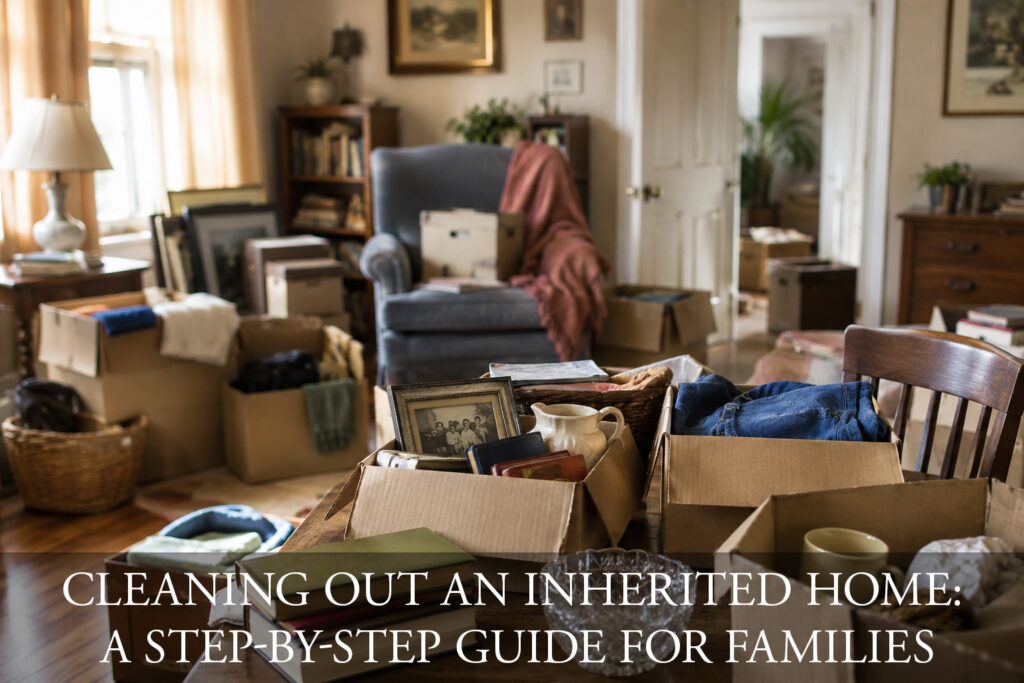
When you inherit a home, the first thing you may think about is what the property is worth. But before you can sell it, rent it, or decide what to do with it, you may face one of the most difficult parts of the process: cleaning out the house.
An inherited home can hold decades of furniture, clothing, paperwork, photographs, tools, kitchenware, collectibles, and personal belongings. What looks like a simple cleanup can quickly become a major project involving hundreds—or even thousands—of decisions.
If you’re facing the task of cleaning out a parent’s, grandparent’s, or loved one’s home, having a plan can make the process much more manageable.
Why Cleaning Out an Inherited Home Can Feel Overwhelming
Every drawer, closet, cabinet, and storage room may contain something connected to your loved one. A box of old photographs can stop you in your tracks. A closet full of clothing may bring back memories. Even ordinary household items can feel too meaningful to throw away.
The emotional attachment can make the process much slower.
In a Realtor.com survey, 54% of heirs and executors said grief or emotional attachment delayed decisions about an inherited home. Another survey cited in the article found that 59% of people who helped clear a relative’s home felt guilt or an obligation to keep family possessions. (Realtor)
That’s why cleaning out an inherited home requires more than a dumpster and a weekend. It requires a plan.
Start With the People, Not the Stuff
Before you start throwing things away, give family members an opportunity to identify what they want. If several relatives have an interest in the belongings, establish a simple process for dividing them.
Consider starting with four categories:
- Keep: Items family members definitely want.
- Sell: Items that may have meaningful resale value.
- Donate: Usable items that someone else could benefit from.
- Dispose: Broken, damaged, or unwanted items with little or no value.
You can also create a fifth category:
- Not sure: Items that require more research before you make a decision.
That last category can prevent costly mistakes.
Don’t Throw Everything Away on the First Day
You may see an old box filled with papers and assume it’s worthless. You may find a drawer full of jewelry and assume it’s costume jewelry. You may see an old collection and assume nobody would want it.
Take a little time before making those decisions.
Valuable items can sometimes hide among ordinary household belongings. Jewelry, precious metals, antiques, collectibles, artwork, tools, and other items may have resale value that isn’t immediately obvious. (Realtor)
It’s much easier to throw something away later than it is to recover something that has already gone to the landfill.
Look for Valuable Items Before the Cleanout
You don’t need to have an expert examine every object in the house. Instead, focus on items that could potentially have significant value.
Pay particular attention to:
- Jewelry
- Gold and silver
- Coins
- Vintage watches
- Artwork
- Antiques
- Collectibles
- Rare books
- Vintage furniture
- Firearms and sporting collectibles
- Designer handbags or clothing
- Musical instruments
- High-quality tools
- Vintage electronics
If something looks unusual, research it before you donate or discard it. For particularly valuable items, consider getting a professional appraisal.
Don’t Overestimate the Value of Everything
Families sometimes assume everything in an inherited home has substantial value because the original owner paid a lot for it. Unfortunately, purchase price doesn’t always equal current market value.
An expensive piece of furniture purchased decades ago may have little resale demand today. The same applies to many household goods, appliances, electronics, and decorative items.
The goal isn’t to convince yourself that everything is valuable. The goal is to identify the few things that may be valuable and avoid throwing them away accidentally.
Create a System for Family Members
Family disagreements can make an estate cleanout even harder. Instead of allowing everyone to grab whatever they want, create a simple system.
One option is to photograph important items and create a shared list. Family members can identify the things they want before anyone removes them. You can also establish a deadline for family members to claim possessions.
For example:
Step 1: Give family members the opportunity to identify items they want.
Step 2: Set aside those items.
Step 3: Research potentially valuable items.
Step 4: Sell items that make financial sense to sell.
Step 5: Donate usable items.
Step 6: Dispose of everything that remains.
This approach reduces confusion and helps prevent arguments over who received what.
Be Careful With Documents and Paperwork
Many inherited homes contain decades of paperwork.
You may find:
- Tax returns
- Bank statements
- Insurance records
- Receipts
- Investment documents
- Warranties
- Medical records
- Personal correspondence
- Legal documents
- Property records
- Old bills
Don’t simply throw everything into a trash bin.
Separate documents containing sensitive personal or financial information and consider professional shredding.
Before destroying important records, check with the appropriate attorney, executor, or tax professional to determine what should be retained.
What Should You Do With Furniture?
A house may contain multiple bedrooms worth of furniture, dining room sets, living room furniture, mattresses, desks, cabinets, and outdoor furnishings.
Start by determining what family members want. Then evaluate the remaining furniture realistically.
Ask:
- Is it in good condition?
- Is there demand for it?
- Is it antique or collectible?
- Would transporting it cost more than it’s worth?
- Could an estate sale company sell it?
- Would donating it be easier?
Don’t spend weeks trying to sell a $50 piece of furniture if you’re paying for storage, transportation, and ongoing property expenses. Your time has value, too.
Estate Sales Can Help—But They Won’t Sell Everything
A professional estate-sale company can sort, price, display, and sell belongings, reducing the amount of work the family has to handle. However, don’t expect every item to sell.
Industry data shows that a typical estate sale contains between 1,000 and 1,999 items but grosses less than $10,000. (Realtor)
That means the purpose of an estate sale isn’t necessarily to make a fortune.
Instead, it can help:
- Reduce the amount of stuff left in the house
- Recover some money
- Give buyers an opportunity to purchase useful items
- Reduce the amount sent to the landfill
- Make the final cleanout easier
Consider Donations Carefully
Many items don’t have enough resale value to justify selling them but still have plenty of useful life left.
Consider donating:
- Clothing
- Kitchenware
- Books
- Small appliances
- Furniture
- Tools
- Linens
- Home décor
- Office supplies
Keep donation receipts when appropriate. However, don’t use donations as a way to avoid making decisions. If a charity cannot reasonably use an item, donating it may simply move the disposal problem somewhere else.
Plan for the Trash
Eventually, you’ll probably have a pile of items nobody wants. That’s where disposal becomes important.
Depending on the size of the cleanout, you may need:
- A pickup truck
- Trailer
- Junk removal service
- Dumpster
- Recycling service
- Special disposal services
The average estate cleanout costs about $1,250, while particularly large or difficult projects can cost $4,000 or more. (Realtor)
Your actual cost will depend heavily on the size of the house, the amount of belongings, the location, and how much work you do yourself.
Don’t Forget the Garage, Attic, Shed, and Storage Buildings
Families often focus on the living areas and forget about the places where people accumulate the most stuff.
Before you consider the house finished, check:
- Garage
- Attic
- Basement
- Storage rooms
- Outdoor sheds
- Barns
- Workshops
- Closets
- Cabinets
- Under beds
- Outdoor storage containers
- Boats, trailers, and recreational storage areas
Work systematically from one area to the next so you don’t overlook anything.
Know When to Hire Help
You don’t have to clean out an entire inherited home yourself.
Professional help can make sense when:
- The house contains decades of belongings.
- Family members live out of town.
- You have limited time.
- The property needs to be cleared quickly.
- The cleanout involves heavy furniture.
- The home contains large amounts of trash.
- Family members disagree about what to keep.
- The process feels emotionally overwhelming.
Professional organizers, estate-sale companies, auction professionals, junk-removal companies, and specialty cleaning services can handle different portions of the process.
Hiring help doesn’t mean you’re avoiding responsibility.
Sometimes it simply means you’re using your time and energy where they’re needed most.
Give Yourself Permission to Let Go
Perhaps the most important part of cleaning out an inherited home has nothing to do with dumpsters, estate sales, or organization. It’s giving yourself permission to let go.
You don’t have to keep your loved one’s entire house to preserve their memory.
Keep the photographs that matter. Keep the family heirlooms that have meaning. Keep the items that tell your family’s story.
But don’t feel obligated to store thousands of objects simply because they belonged to someone you loved.
A home can hold a lifetime of memories without every possession needing to come with you.
A Simple Inherited Home Cleanout Checklist
Use this checklist to keep the project organized:
☐ Talk with family members before removing belongings
☐ Secure important documents and valuables
☐ Create Keep, Sell, Donate, Dispose, and Evaluate categories
☐ Photograph valuable or sentimental items
☐ Research antiques, collectibles, jewelry, and other potentially valuable items
☐ Set aside family heirlooms
☐ Arrange an estate sale or auction if appropriate
☐ Donate usable household items
☐ Shred sensitive paperwork
☐ Arrange junk removal or a dumpster
☐ Clean out the garage, attic, shed, and other storage areas
☐ Deep-clean the home after removing the belongings
☐ Make a final walkthrough before considering the cleanout complete
The Bottom Line
Cleaning out an inherited home can become one of the most time-consuming and emotional parts of settling an estate.
The key is to avoid treating the project like a race.
Take time to identify valuable and sentimental items. Give family members an opportunity to choose what they want. Separate belongings into clear categories. Sell what makes sense, donate what you can, and dispose of the rest responsibly.
Most importantly, remember that you don’t have to handle the entire cleanout alone.
Whether you spend a few weekends working with family or hire professionals to handle the entire project, having a plan can turn an overwhelming house full of belongings into a manageable project—and ultimately leave the home ready for its next chapter.